A couple of people have suggested I should write a post about wine. Well, perhaps not about wine – I’m no expert and am happy with the vino honesto and no muy peleón that I can get in the local supermarket for 0.99€ a bottle – but about the language that is used to talk about it, particularly on wine labels.
I think it might have been Miles Kington (there’s an archive of his Independent column here) who said that if you were at a loss for words at a wine tasting, just look around the room and describe one of the other people present: big nose, full-bodied, fruity…
The same kind of flowery language is used here in Spain, so it came as no suprise when a friend told me the label on the Spanish wine he was drinking described it as:
“Uvas Tempranillo. Vino color cereza granate, aroma afrutado, es un vino de entrada en boca amplio, carnoso y persistente.”
The English version of the label made no mention of the wine making a big entrance in the mouth, nor its carnality and persistence, which is a shame. Instead it said:
“A medium-bodied, youthful red produced exclusively from selected Tempranillo grapes, Spain’s premier red grape variety. Modern winemaking techniques give a supple, rounded style with fresh, berry fruit characters.”
To my ear, that definitely lost something in translation.
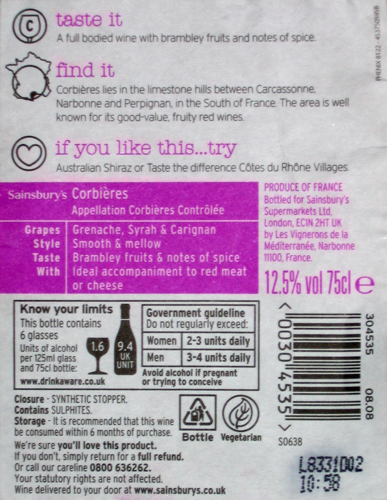
“A full bodied wine with brambley fruits and notes of spice.”
Hmm. “Brambley fruits” sounds like the setting for a children’s book. Presumably featuring those “berry fruit characters” from the Spanish wine.
As for “notes of spice”, well that, presumably, makes it “what you want, what you really, really want.”

 don't confuse the narrator
“Vino de gran personalidad.” That’s what one of my bottles says. “Great personality.” Of course. No one makes a shy, modest wine that will pass your palate with little notice…. Though sometimes that would be truth in advertising.
LikeLike
Hey Sue,
The empty bottle of white in my kitchen says the wine has “un sabor ligero y equilibrado que le hacen muy agradable durante su degustación.”
I’m tempted to infer that it can have nasty after-effects, although, fortunately, I didn’t notice any.
Any good wine quotes in Amadis?
LikeLike