stars and stats

The poetry course that I’m taking started with a discussion of sand and stars. More precisely, with the statement that there are ten times as many stars in the universe than there are grains of sand on Earth. (If you’re interested, here’s the maths that backs up the estimate.) I don’t think we mentioned, though, that there are more atoms in a single grain of sand than there are stars in the universe.

Either way, macrocosmos or microcosmos, a number that big is hard to comprehend, and the human brain tends to look for simplifications and ideas closer to home.

I’ve just been out in the garden and, unlikely as it seems, I suppose I’ll just have to assume there are more stars in the universe than there are blossoms on the plum tree.

plum blossom

multitasking

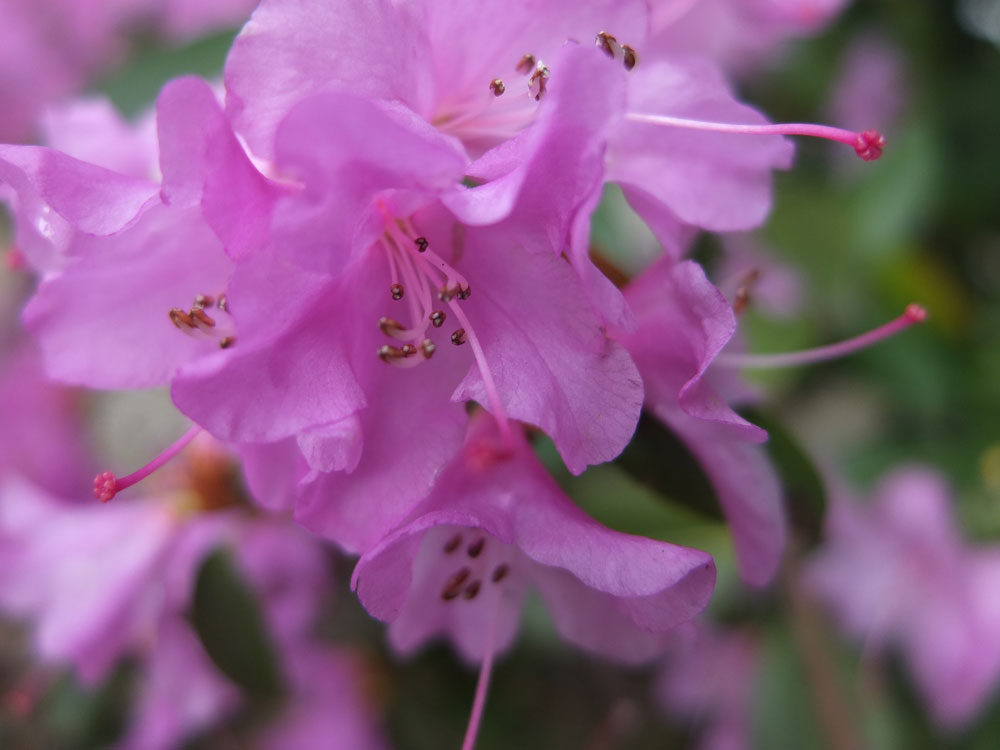
purple azalea flower
I seem to have as many things on my “to do” list as the neighbour’s azalea has flowers at the moment. Sadly, none of my projects are likely to be so attractive when completed.

clichés and home-comings

primroses
I’m currently taking a poetry class where many of the students are from overseas. They know England from their reading – many have studied English Literature – but this is their first personal experience.

Knowing the country and its culture as well as they do, it must feel like a sort of home-coming. It certainly provokes such delightful situations as when one asked about the flowers on the secretary’s desk: “Are those daffodils? Like Wordsworth’s daffodils?”
Continue reading “clichés and home-comings”

St David’s day

daffodils
As always on March 1st, I have been thinking about daffodils. And that has driven me to A A Milne’s essay on favourite flowers. As he says:

A house with daffodils in it is a house lit up, whether or no the sun be shining outside. Daffodils in a green bowl–and let it snow if it will.

There is no snow forecast – though when did we ever believe a forecast? Whatever the weather, though, I have a jar of sunshine on my windowsill.

armies of the dead

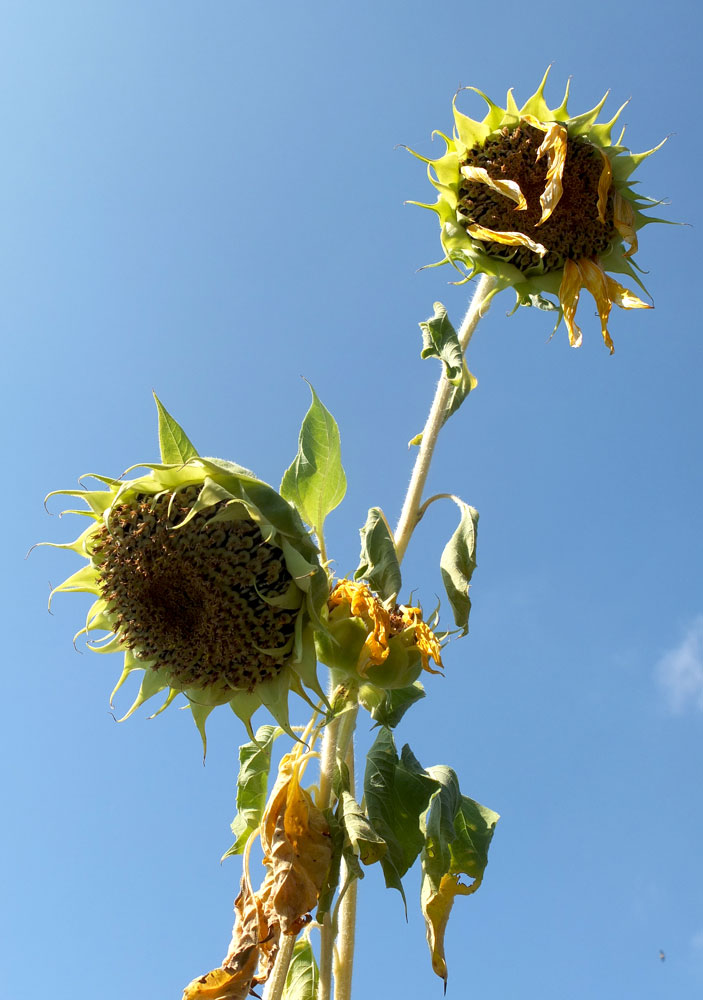
dead sunflowers

Some years ago I was in the south of France at this time of year. Everywhere we went there were fields of dead sunflowers lined up like troops deployed to watch the roads.

Instead of the open faces and bright golden helms and plumes of summer knights, these figures had heavy dark heads set precariously on bony stalks that were slowly bleaching to ivory as the year began to fade.

Travelling by car, we sped past far too fast for me to do more than note the overall effect.

Today, though, the stark silhouettes looking over my garden fence have reminded me of these skeletal armies. I can only imagine what it must be like to walk past field after field of them, particularly when the wind is high and their mis-shapen yellowing limbs twitch and shiver and they whisper to each other in a secret language.