seeing red

I never collected butterflies as a child, never owned a killing jar, never pinned spread wings flat on boards or boasted of my trophies to visitors. I did, however, own a butterfly net made from a piece of net curtain, a hoop of wire and a bamboo garden cane – well, maybe my brother owned it and I acquired it – which features in the poem Childhood posted last autumn.

I could also identify just about every adult butterfly in the book, though I was less expert when it came to caterpillars.

Dead cinnabar moth
Last week, then, when I came across the lovely creature in the photo, I knew it wasn’t a butterfly at all. It had to be a moth. In fact it’s a cinnabar moth, and common enough that I am surprised I’d never seen one before.

The final lines of the poem Childhood are:

The butterflies have flown away;
their colours paint my dreams.

I’m wondering now if in fact it is moths like this that add that dash of dream colour.

what are you reading?

I don’t know what the book was that caused this damselfly to go bug-eyed and blush right down to the tip of his tail, but I think he looks as if he wants to tell someone about it:

large red damsel fly

net value

net curtain shadow

In the moonlight
giant moths
gather on my bedroom wall

 
Actually, it’s the light of a street lamp, and therefore they only gather there until midnight and from 5:30am as the local council switch the lights off during the darkest part of the night to save energy.

And, of course, they aren’t quite moths. But they are near enough to have made me think about the poor creatures trapped in the net of the curtains and want to put the thought down here in case I can use it at some point in the future.

idiomatic

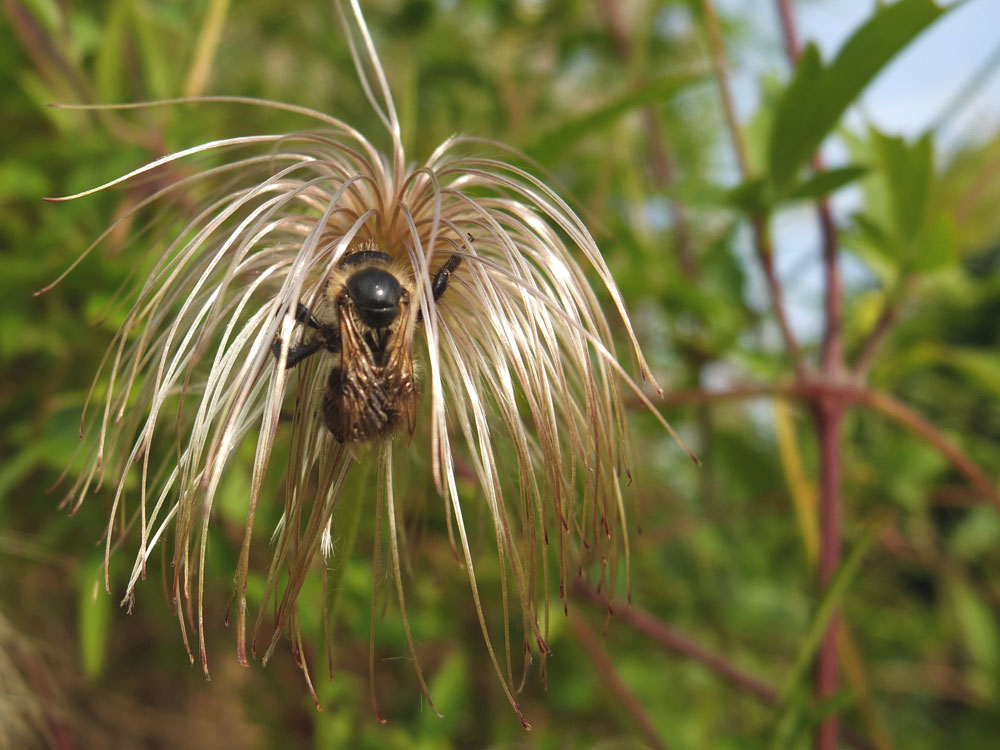
I’m not sure if this counts as a hairy situation:

bee and clematis tangutica seed head (old man's beard)
It’s clearly not the cat’s whiskers. But it might be the bee’s knees.

feeling antsy

ant carrying seed
I get lots of newsletters in my inbox and barely have time to do more than scan them, but earlier this week, the headline “Sisterhood of Ants: The Original Social Network” caught my eye, so I clicked through to read the opening paragraph:

As we struggle to understand what it means to be social creatures who meaningfully participate in communities and networks, ants and mice (and the scientists who study them) may be able to tell us something about ourselves.

Continue reading “feeling antsy”