as bright as lightbulbs.
with sunlight
Tag: flowers
there’s a bug

(Incidentally, I’m beginning to think I should change the blog tag-line to “Mostly first person poetry, prose, pedantry and plant pictures.”)
writing it slow
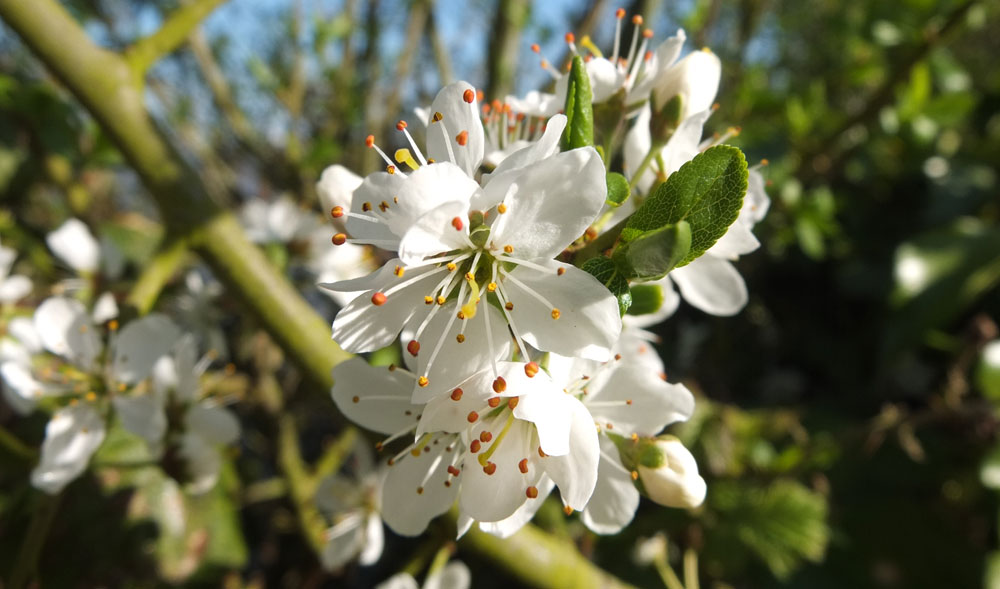
That said, I had completely forgotten this version, which I think must have been written some time last year for a sonnet competition and abandoned when it wouldn’t conform to the formal constraints. Since the sloe trees are in full bloom this weekend, it seems a good time to post it:
Continue reading “writing it slow”
verses and versions

Over the last couple of weeks I’ve been re-visiting some old poems and re-drafting, revising and re-writing.
Some of the changes are substantial – whole stanzas, refurbished, renovated, knocked in together or removed completely. With changes like this it’s usually clear whether the result is an improvement.
Other changes, though, are less clear cut. I feel like Oscar Wilde when he said he’d been hard at work all day on a poem: “This morning I took out a comma and this afternoon I put it back in again.”
I know that every little detail of a poem is important, but sometimes I feel that recognising the exact best version is like trying to find the prettiest flower in a patch like the one in the picture.
narcissus
This picture was irresistible as it seems clear that each narciso (as they are called in Spanish) is enamoured of its own reflection.
Looking for an apt poetical quotation, I find that Sir Aubrey de Vere described the daffodil as “Love-star of the unbeloved March”.
Well, it’s certainly March, and the weather here is undoubtedly unlovely. (That flower bed is at least two inches deep in water at the moment, and it’s at the top of the garden; I dare not venture down to see if the trees in the orchard are knee deep, but I suspect they must be.)
 don't confuse the narrator