One for sorrow, two for joy; three for a girl and four for a boy; five for silver, six for gold…
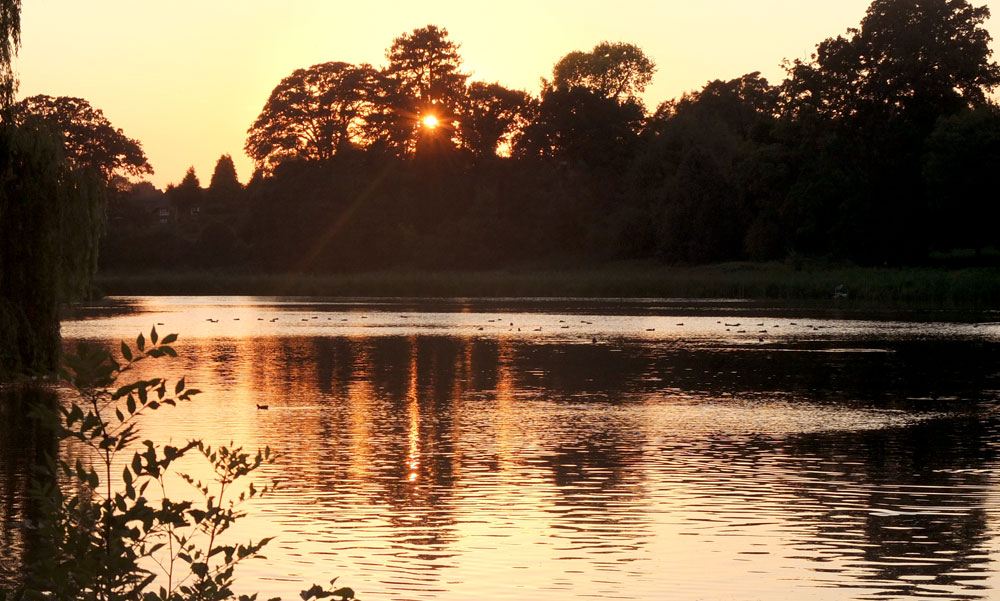
There were six magpies bickering in the trees by the river last night. Sadly, I fear they weren’t foretelling the imminent receipt of a large fortune, just the arrival of sunset over the lake:
Dark blades slice through the air, turn
sideways to the sun, flash silver, turn
into bright fish that glide in endless blue.
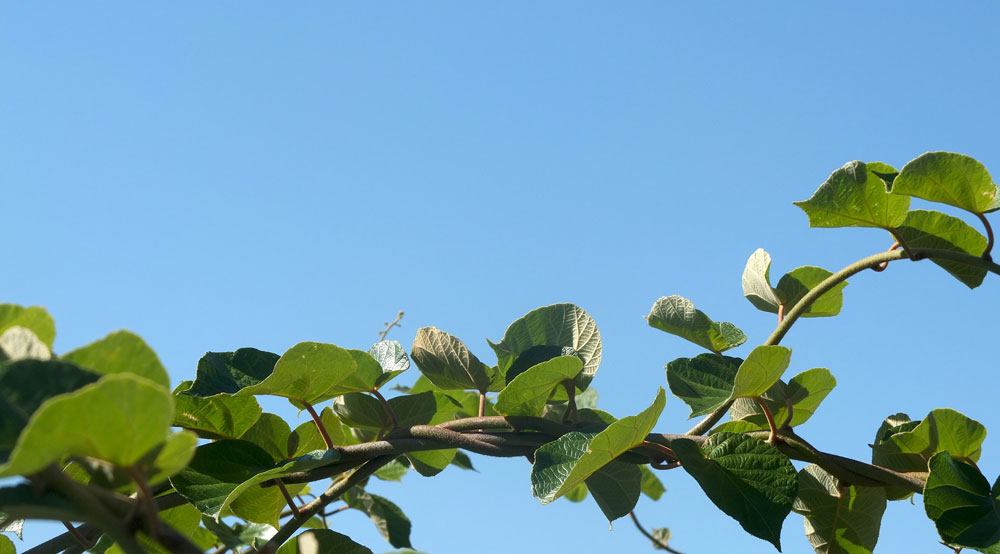
There are no swallows in the picture as they move too fast for my limited photography skills. The sky, on the other hand, is never-ending blue and doesn’t pose the same problems.
The post title is “swallows II” because this is not the first poem I have posted about swallows.
I had an email early this week asking for permission to include three of my limericks in an English school workbook, which is to be published in September ready for the new academic year. This wasn’t really a surprise as I’d agreed with the author back in February that she could use them. Even so, I had half forgotten our conversation and wasn’t sure when the book was due out or when I might hear. Continue reading “permission granted”
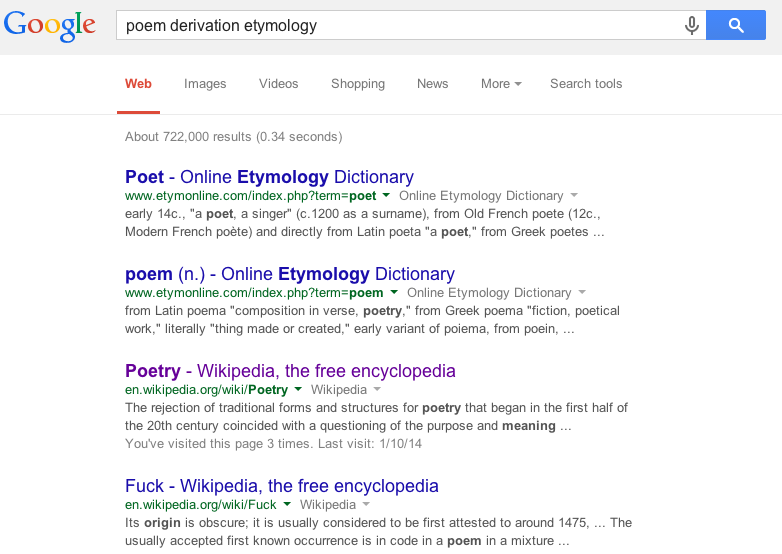
This morning, I wanted to make a pun on the idea of a poet as a “maker” and a poem as “a made thing”; before I did so, though, I went to Google to check that I had the etymology right. What I found reminded me of those IQ test questions where you fill in the next word in a set or in a sequence.
Here the sequence starts “poet, poem, poetry,” but the final word is not the one I would have expected:
I never collected butterflies as a child, never owned a killing jar, never pinned spread wings flat on boards or boasted of my trophies to visitors. I did, however, own a butterfly net made from a piece of net curtain, a hoop of wire and a bamboo garden cane – well, maybe my brother owned it and I acquired it – which features in the poem Childhood posted last autumn.
I could also identify just about every adult butterfly in the book, though I was less expert when it came to caterpillars.Last week, then, when I came across the lovely creature in the photo, I knew it wasn’t a butterfly at all. It had to be a moth. In fact it’s a cinnabar moth, and common enough that I am surprised I’d never seen one before.
The final lines of the poem Childhood are:
The butterflies have flown away;
their colours paint my dreams.
I’m wondering now if in fact it is moths like this that add that dash of dream colour.


 don't confuse the narrator