illuminating moments

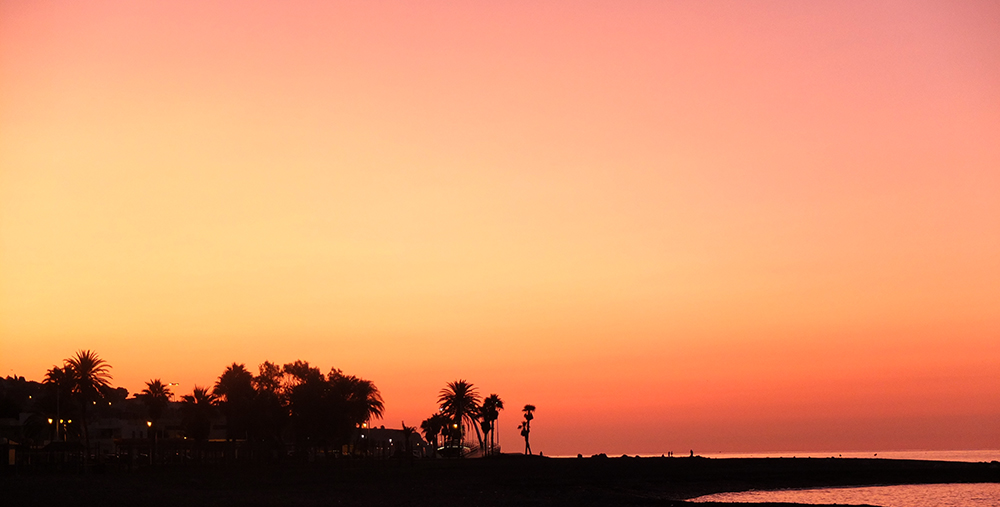
The sunrise streets
are hammered gold
while mundane city bylaws
 gleam
with transient enlightenment

Not for the first time, I am reminded that much of my poetry is centred on the visual and heavily influenced by the quality of light.
Continue reading “illuminating moments”

angles

Camera in hand
she walks the beach, pauses,
leans agains palm trees,
clambers over breakwaters,
climbs on railings and balances
on benches along the promenade, trying
to get an angle on the sunrise.

Continue reading “angles”

not nice

A couple of weeks ago I wrote a post inspired by the words “poems are hard”, which appeared on a local pub chalkboard. It’s not just the poems themselves that are hard, though: it’s even hard to get people to agree on what poetry is.

Some people think that poetry should deal with the big issues of Life, Love and Death, others that it should be all kittens and flowers, sweetness and light; some think it should make us look at familiar things and occurrences as if they were new; others that it should make the personal universal; some think it should have structure and be carefully crafted, others that it should rhyme, others that it should be written “from the heart” and therefore anything goes.
Continue reading “not nice”

creative grit

The guy at the pub is right: poems are hard.

Sometimes you have a great idea – the tiny bit of grit with potential to grow into a beautiful pearl – but however much you turn and tweak and worry it, it seems to refuse to gather form and realise its potential.

When this happens, all you can do is put the notes to one side and let your subconscious go on working while you get on and do other things.
Continue reading “creative grit”

clichés and coincidences

Novice poets are frequently warned about clichés; sometimes, though, it’s hard to know exactly what the people doing the warning have in mind. Is a cliché the same as an idiom? Is it just a common collocation of words? Can a single word be a cliché?

(In answer to that last question, I’ve posted several times in the past on the subject of “forbidden words” in poetry.)

The thing about clichés is that they mean the writer hasn’t done more than scratch the surface. And for poetry that matters a lot more than for some other types of writing.
Continue reading “clichés and coincidences”