automatic writing

Yesterday, I signed off an email to a colleague with the Spanish phrase que te sea leve. It seemed appropriate, knowing that the summer is upon us, compañeros de trabajo are off on holiday and teams that are stretched at the best of times are now at snapping point.

bare bone on bare earth
Let the earth lie light...
“Que te sea leve” ~ “may it (life) be light for you.”

I like the phrase, but had no idea of its derivation.

Fortunately, despite the absence of colleagues, there is usually time for an exchange of ideas and information, and he pointed out that this is more or less what the Romans put on the tombstones of loved ones:

Sic tibi terra levis. ~ Let the earth lie light upon you.

What a lovely phrase.

Still, that’s all rather incidental to this post, which was prompted by the actual physical act of typing que te sea leve, rather than by its meaning.
Continue reading “automatic writing”
there’s always someone worse off…

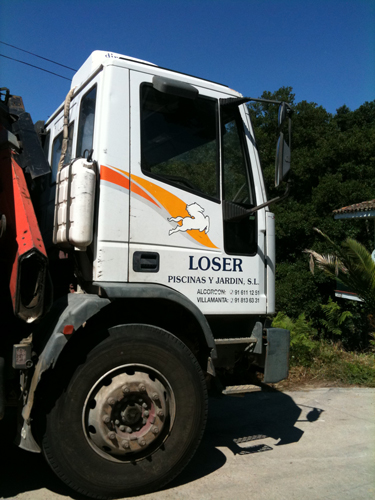
loser swimming pool truck

I have had plenty of trouble with my own surname over the years, so I don’t have a lot to say about this.

But I guess it does make me think of the (mostly apocryphal) stories of brand names that don’t travel between languages and cultures.

I wonder if “Mr Perdedor” drives a Chevrolet Nova when he isn’t driving his truck. (They say they didn’t sell well in países hispanohablantes as no one wanted un coche que no va.)

verses and versions

One of the joys of speaking two languages is that you get far more opportunities for puns than monolinguists do.

It was with delight, then – and with a language hiccough mid-way – that I saw the following on the El País website earlier today:

Headline: El general McChrystal llega a la Casa Blanca para verse con Obama
Well-versed in military matters?

The word verse flipped my mind into English and conjured the wonderful image of Obama and McChrystal having a flyting contest.

him-her; big-small

“Las formas femeninas suelen ser más grandes.”

Well, that may not be the exact phrase my colleague used, but it was along those lines, and it wasn’t meant to insult women in anyway. We were discussing a translation for the Mexican word cenote and he was trying to explain what it meant. Not a pozo (a well), but a poza. But what was a poza? According to the RAE, it’s a:

Charca o concavidad en que hay agua detenida.

Note that the definition uses the word charca, not charco. Again, two similar forms; so what’s the difference?
Continue reading “him-her; big-small”

pc or not pc

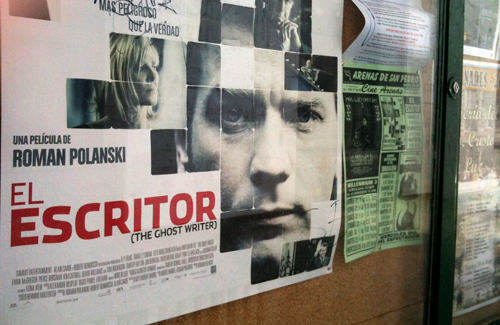
The local cinema is showing Polanski’s The Ghost Writer and this is the poster advertising the film:

ghost writer poster - el escritor

You’ll notice that the title has been translated into Spanish as El EscritorThe Writer. I wonder whether that’s because the word used for a “ghost writer” is negro.
Continue reading “pc or not pc”