clichés and home-comings

primroses
I’m currently taking a poetry class where many of the students are from overseas. They know England from their reading – many have studied English Literature – but this is their first personal experience.

Knowing the country and its culture as well as they do, it must feel like a sort of home-coming. It certainly provokes such delightful situations as when one asked about the flowers on the secretary’s desk: “Are those daffodils? Like Wordsworth’s daffodils?”
Continue reading “clichés and home-comings”

travelling

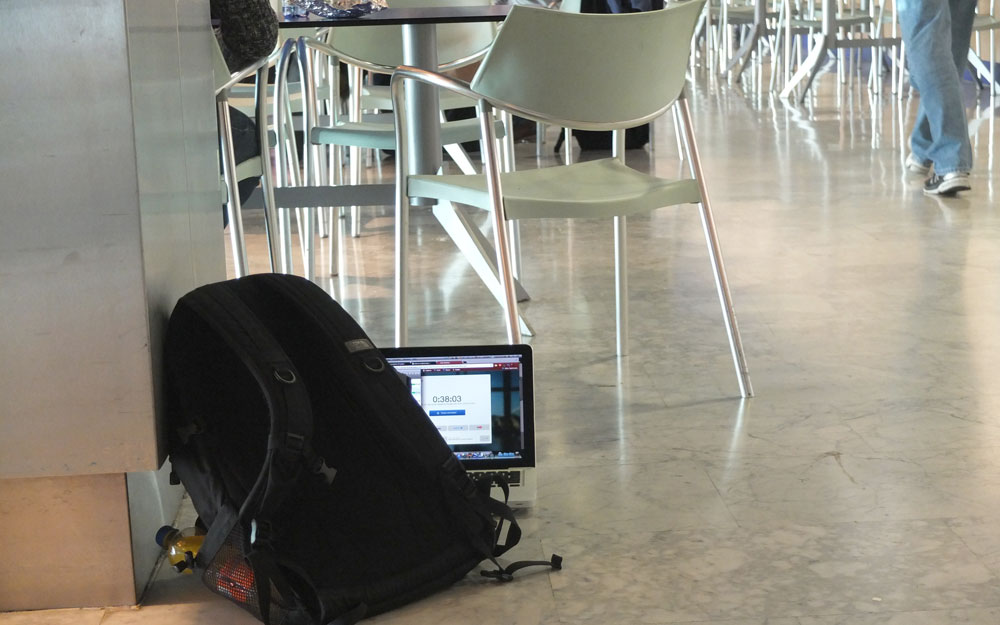
When I was a teenager we had fairly regular bomb scares at school. I was too politically naïve to know if it was the IRA or the PLO who were intent on disrupting my education, but I do remember that we spent many happy hours out on the playing fields waiting while sniffer dogs and their handlers searched the building.

countdown on computer screen
We were always told to take our bags with us when we evacuated the building as it left fewer things to be searched. And I learned to be wary of bags and packages left unattended at airports, railway stations and shopping centres.
Continue reading “travelling”

autumn wings

Speeding bus
startles
a flock of leaves
into flight

autumn leaves

facing up to fiction

cornfield (maize) after harvest
Several lists of “rules for poetry” have been doing the rounds this week, perhaps in response to these 25 rules for editing poems from Rob Mackenzie for Magma Poetry.

It’s hard to disagree with anything Mackenzie says, particularly as the list is followed by the rider “good poets are always ready to break rules whenever a poem demands it.”

That said, the “rule” that caught my eye was:

15. Consider the poem’s “truth”. Not the literal facts (although those may be important at times) but the emotional resonance. Is the emotion genuine or just received wisdom?

Continue reading “facing up to fiction”

iberianismos

view from plane window
As I understand it, air traffic control operations are conducted either in English or in the local language, making good English a required skill for international pilots. It always worries me, then, when a pilot’s accent is so strong that his announcements are incomprehensible.
Continue reading “iberianismos”