Years ago, I wrote a long and rambling free verse poem that started “My mother makes sloe gin”. It was a runner up in a poetry competition, but despite the minor success, I was aware that it was rather flabby; I think I’ve been trying to force it into some kind of form for near on a decade.
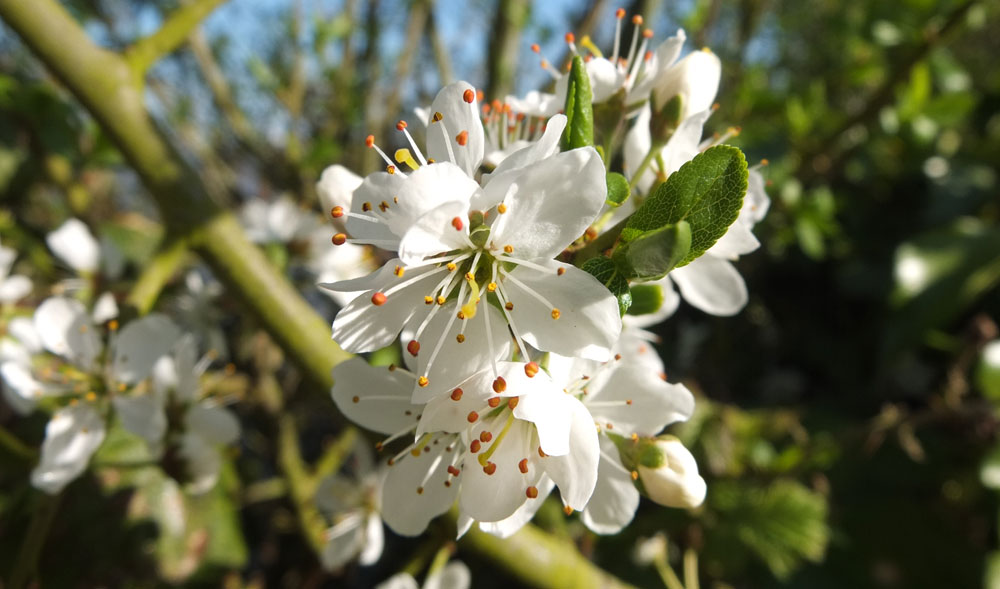
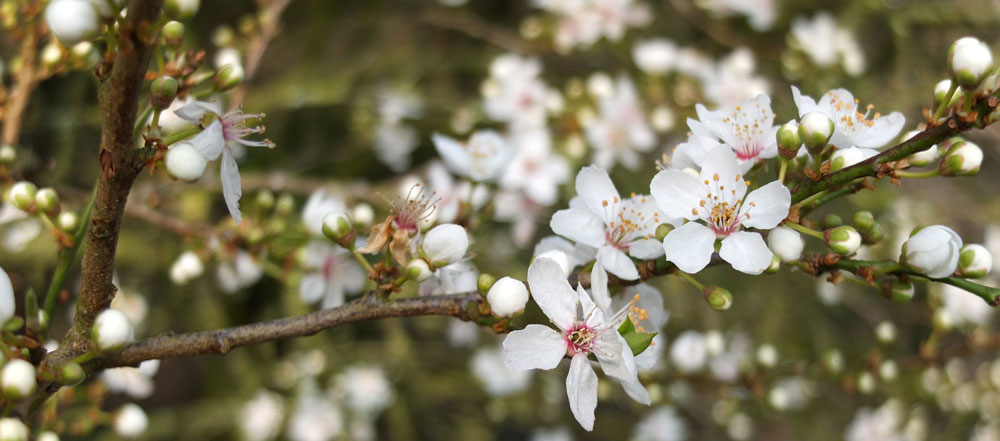
That said, I had completely forgotten this version, which I think must have been written some time last year for a sonnet competition and abandoned when it wouldn’t conform to the formal constraints. Since the sloe trees are in full bloom this weekend, it seems a good time to post it: Continue reading “writing it slow”
In addition to the 5-7-5 syllable “rule”, the NYT explain:
A proper haiku should also contain a word that indicates the season, or “kigo,” as well as a juxtaposition of verbal imagery, known as “kireji.”
They then admit:
That’s a lot harder to teach [as] an algorithm, though, so we just count syllables like most amateur haiku aficionados do.
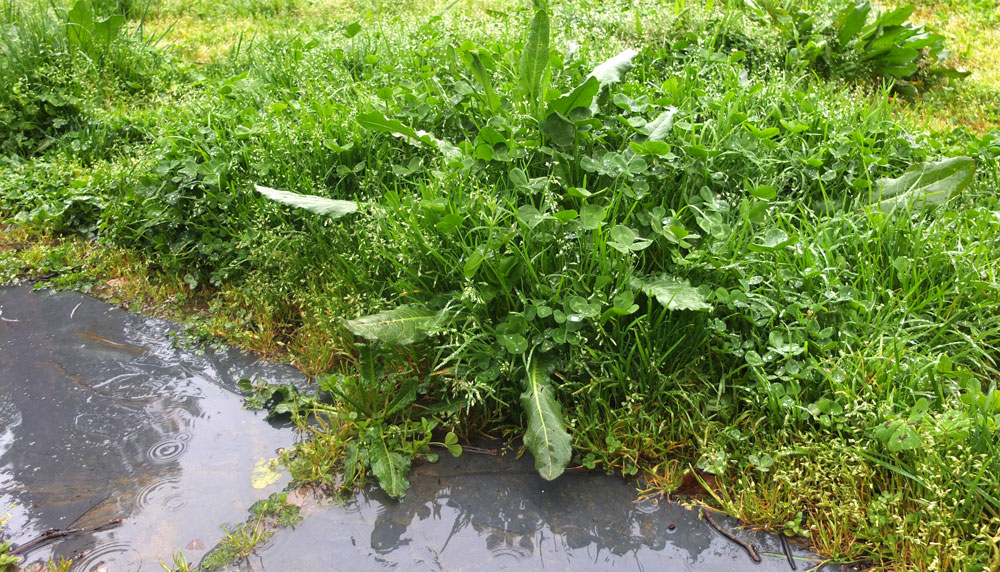
It’s rather late in the day, so I’ll simply offer a picture of the weeds in my garden – a “juxtaposition of vernal imagery”, which is as close to a kireji as I can manage right now.Note that the weeds are certainly green and also rather cabbage-looking; perhaps they would have been good subjects for April Fools’ Day pranks.
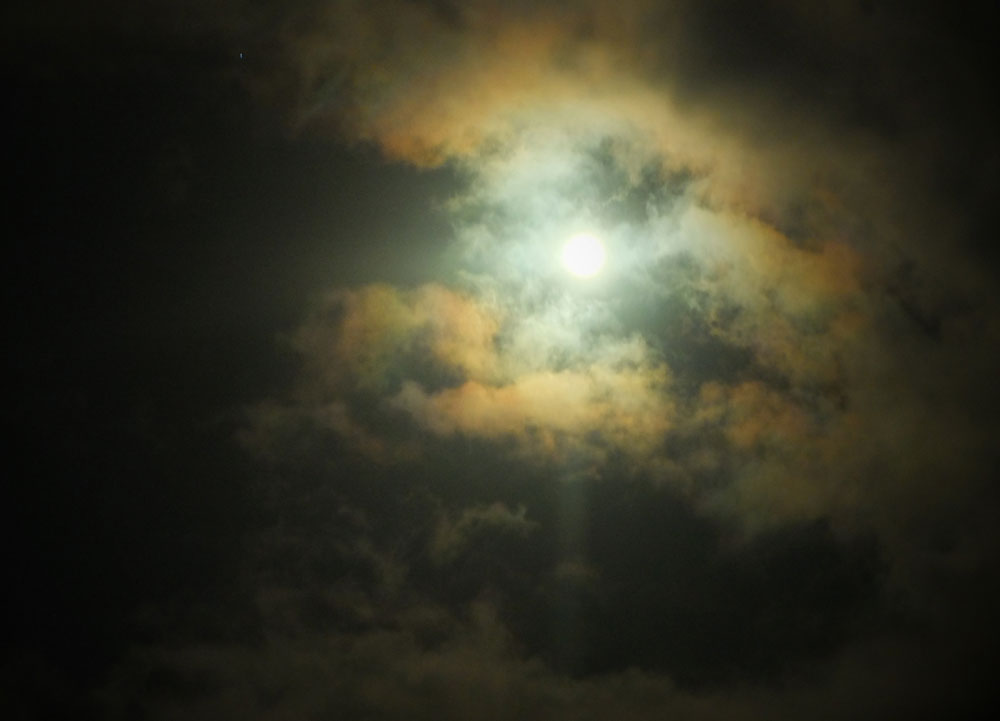
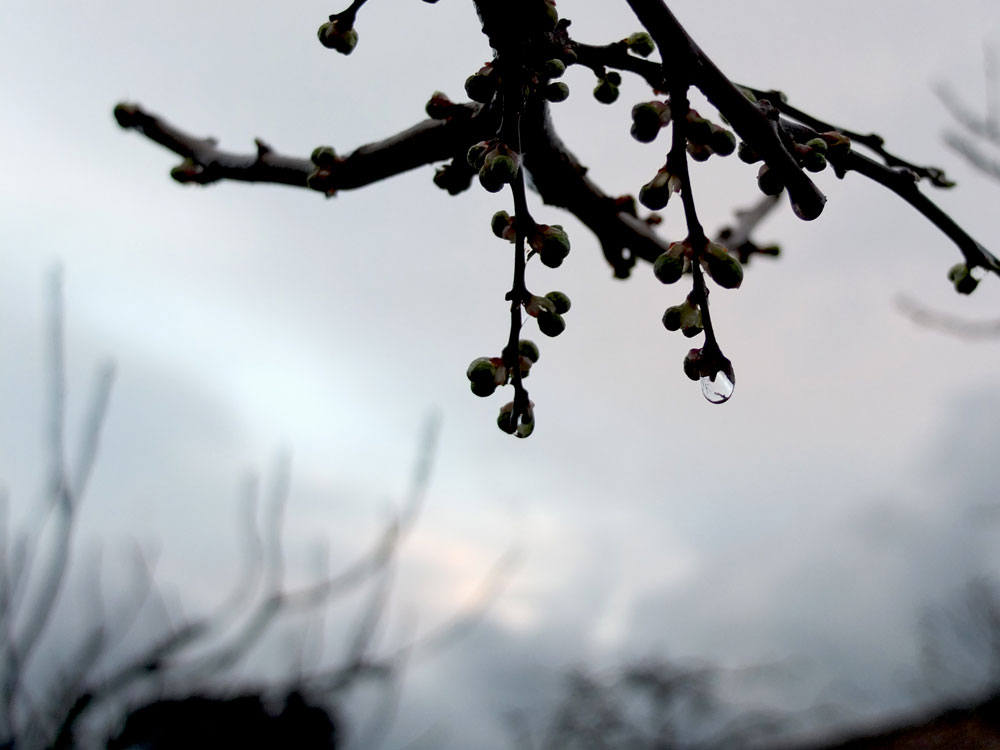
Well, I’m back in the pueblo and the weather is wet and wild. Yesterday evening there was a brief pause in the downpour, though, and I managed to take a few pictures. (As always, you can click each photo to see a larger version.)
I love the way the raindrops and buds work together, but I need to practise more to get the pictures I really want. A little sunshine might help, too. Continue reading “drop by drop”
One problem with travelling is that half the time you don’t know what you’re looking at.
I am probably less familiar now with the flora and fauna of the UK than with that of Spain, and I have no idea what the tree I photographed this morning was. Continue reading ““all ye need to know””
 don't confuse the narrator