in Guadalajara

Well, OK, I’m not saying I’m in Guadalajara.

I’m not even saying My editor is in Guadalajara at what was described in El País as “the biggest event of its kind in the Spanish language.”

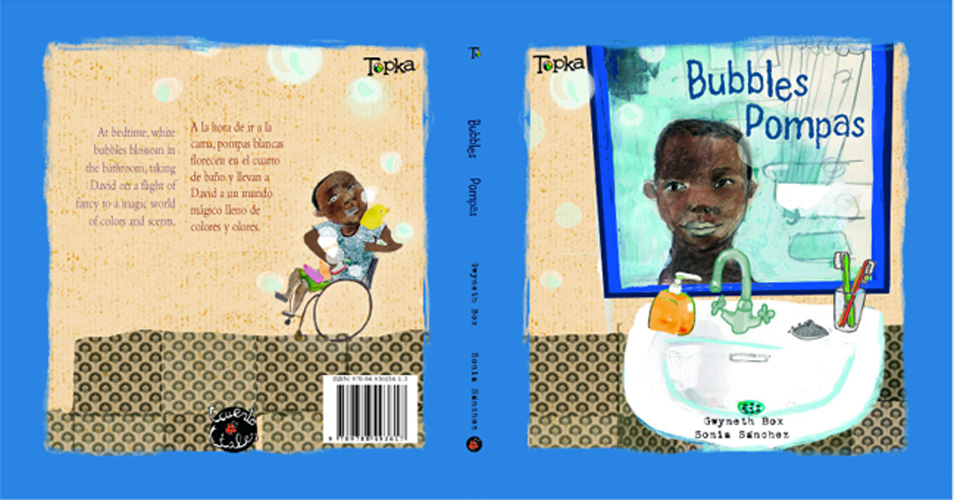
But my editor – don’t you love that phrase! – tells me that a colleague from a Madrid bookshop has taken Topka book samples with her to the Book Fair. So Bubbles is in Guadalajara.

Which has to be a step in the right direction.

explosive news?

Is it only me, or does the juxtaposition of these two headlines – from the same page of today’s El País – catch the attention of anyone else out there?

Burning exes, exploding immigrants...

Was it the proximity to the first story that forced the headline writer to use such an ugly adverb as “laboralmente” in the second?

And am I the only person who noticed the flyer which fell out when I turned the page?:
Continue reading “explosive news?”

reader, beware

In these days of economic recession, credit crunch, financial crisis, or whatever term the media are using today, it’s logical that we should look back to the Wall Street crash of ’29 in an attempt to make comparisons and perhaps find solutions.

However, in these days of electronic media, blogs, wikis, archives and resources written by “the unwashed masses”, it’s all too easy to get confused by what’s real and what isn’t. Continue reading “reader, beware”

from poem to picture book

Any author will tell you that the process which results in a book reaching the bookshop shelves is long and, at times, tortuous.

My own experience makes it five and a half years from the original poem being written to its appearance this month as Bubbles, a bilingual children’s picture book, now available from Topka.

from poem to picture book

Continue reading “from poem to picture book”

on translating poetry

I’ve been thinking again about translating poetry, partly because it’s a pet subject of mine, and partly because I’m hoping to run a course on the subject next year and have been preparing the course spec.

One of the recurring questions is “when does a translation cease to be a translation and become a derivative work?”.
Continue reading “on translating poetry”